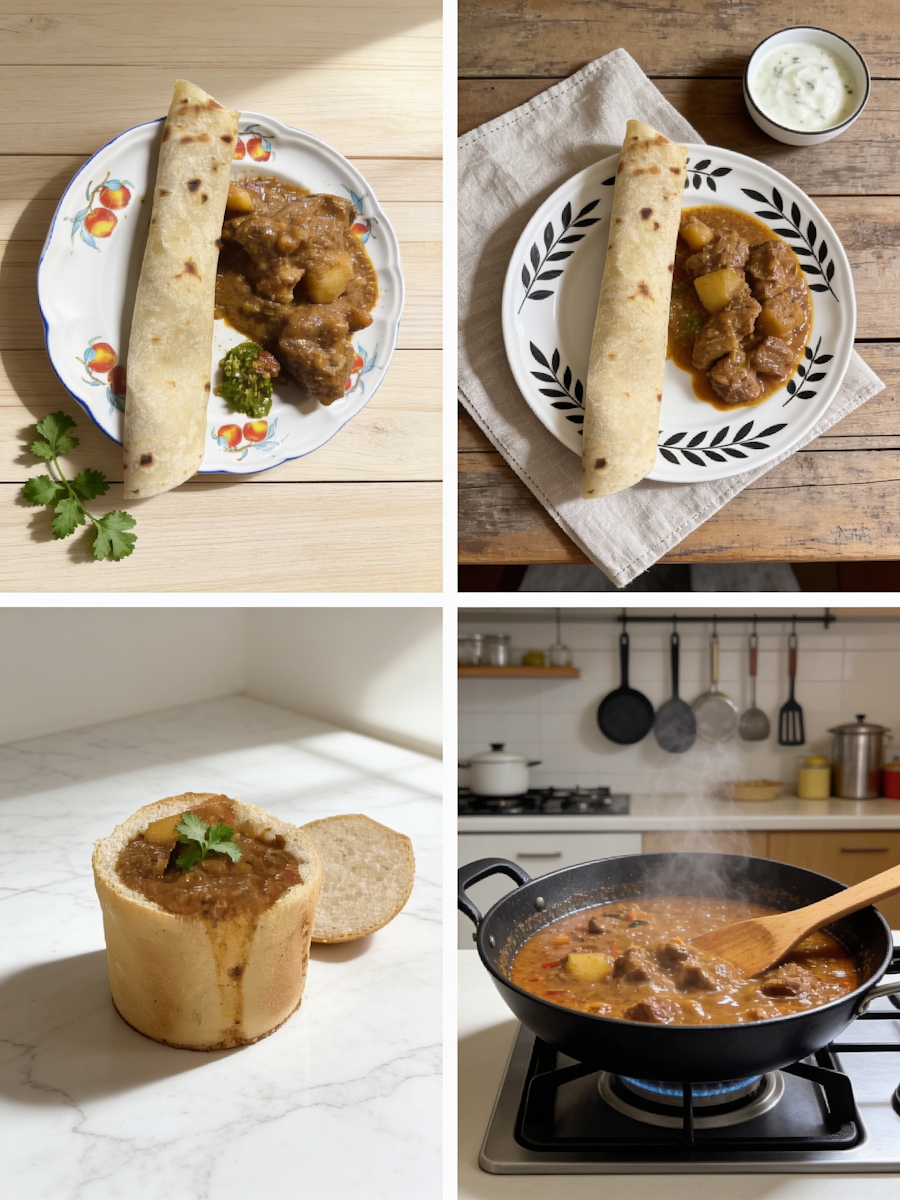
A mutton curry with roti — stovetop, spice-forward, and forgiving if you walk away from the pot for five minutes. Writing it down here while it’s fresh so the next attempt starts from a checklist instead of memory.
Mutton Curry#
Ingredients#
- 1kg mutton (bone-in, curry cut)
- 3 tbsp oil or ghee
- 2 large onions, finely sliced
- 3 tomatoes, chopped (or 1 cup tomato puree)
- 2 tbsp ginger-garlic paste
- 2–3 green chilies, slit
- 1 cup plain yogurt, whisked
- 1 tsp turmeric powder
- 2 tsp red chili powder (adjust to taste)
- 2 tsp coriander powder
- 1 tsp cumin powder
- 1 tsp garam masala
- 2 bay leaves
- 4–5 whole cloves
- 2 green cardamom pods
- 1 cinnamon stick
- 1 tsp cumin seeds
- Salt, to taste
- Fresh coriander, chopped, for garnish
- Water, as needed
Method#
Brown the mutton. Heat the oil or ghee in a heavy-bottomed pot over medium-high heat. Add the mutton pieces and cook, turning occasionally, until browned on the outside, about 8–10 minutes. Remove the mutton and set it aside — it goes back in later.
Brown the onions. In the same oil or ghee left in the pot, add the cumin seeds, bay leaves, cloves, cardamom, and cinnamon stick, and fry for 30 seconds until fragrant. Add the sliced onions and cook, stirring occasionally, until deep golden brown — this takes 12–15 minutes and is the base of the flavor, so don’t rush it.
Build the masala. Add the ginger-garlic paste and green chilies, cook for 1–2 minutes until the raw smell disappears. Add the chopped tomatoes and cook until they break down and the oil starts to separate from the mixture, about 8–10 minutes.
Add the spices. Lower the heat and add the turmeric, chili powder, coriander powder, and cumin powder. Stir well and cook for 1–2 minutes, adding a splash of water if the spices start to catch.
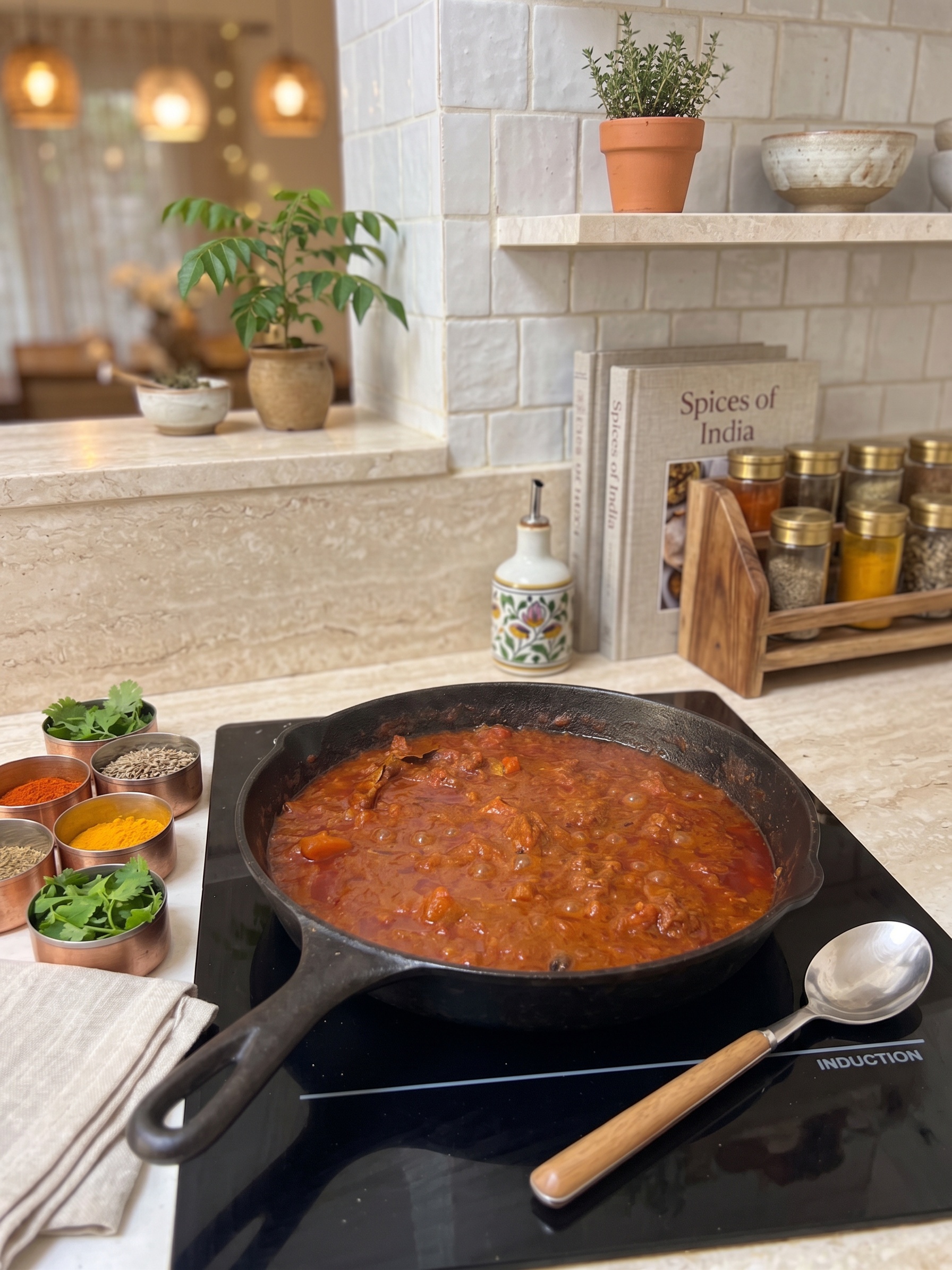
Add the yogurt and mutton back. Return the browned mutton to the pot. Reduce heat to low and stir in the whisked yogurt a little at a time to prevent it from splitting. Season with salt. Cover and simmer on low heat, stirring occasionally, for 45–60 minutes, or until the mutton is tender. Add water as needed to reach your preferred gravy consistency — start with 1 cup and add more if it’s drying out.
Pressure cooker option. If using a pressure cooker, do steps 1–4 in the cooker directly — brown the mutton first, set it aside, then brown the onions in the same oil before building the masala and adding the spices. Return the mutton to the cooker, add yogurt and salt, then seal and cook for 4–5 whistles (or ~20 minutes at pressure), letting it release naturally.
Finish. Once the mutton is tender and the oil floats to the top, stir in the garam masala, simmer uncovered for 5 more minutes to thicken slightly, and garnish with fresh coriander.
Notes#
- Bone-in mutton adds flavor to the gravy — don’t substitute boneless unless you’re short on time.
- The curry improves after resting a few hours or overnight; the spices settle in.
Roti#
Ingredients#
- 2 cups whole wheat flour (atta), plus extra for dusting
- ¾–1 cup warm water
- ½ tsp salt (optional)
- 1 tsp oil (optional, for softer dough)
- Ghee or butter, for brushing
Method#
Make the dough. In a large bowl, combine the flour and salt. Gradually add warm water, mixing as you go, until a soft dough forms. Knead for 5–8 minutes until smooth and elastic. Cover with a damp cloth and rest for 20–30 minutes.
Divide and roll. Divide the dough into equal-sized balls (golf-ball size). Dust with flour and roll each ball into a thin, even circle, about 15–18cm across.
Cook on the tawa. Heat a flat griddle (tawa) over medium-high heat. Place the rolled roti on the hot surface. Cook for 30–45 seconds until small bubbles start to appear, then flip.
Puff it up. Cook the second side for another 30–45 seconds, then either flip it directly onto an open flame for a few seconds until it puffs up like a balloon, or press gently with a folded cloth on the tawa to encourage puffing.
Finish. Remove from heat, brush with ghee or butter, and stack in a cloth-lined container to keep warm and soft until serving.
Notes#
- Resting the dough is what makes rolling easier and the roti softer — don’t skip it even when short on time.
- Roti is best eaten fresh off the tawa; stacked and covered, they stay soft for a while but the puff doesn’t survive long.