
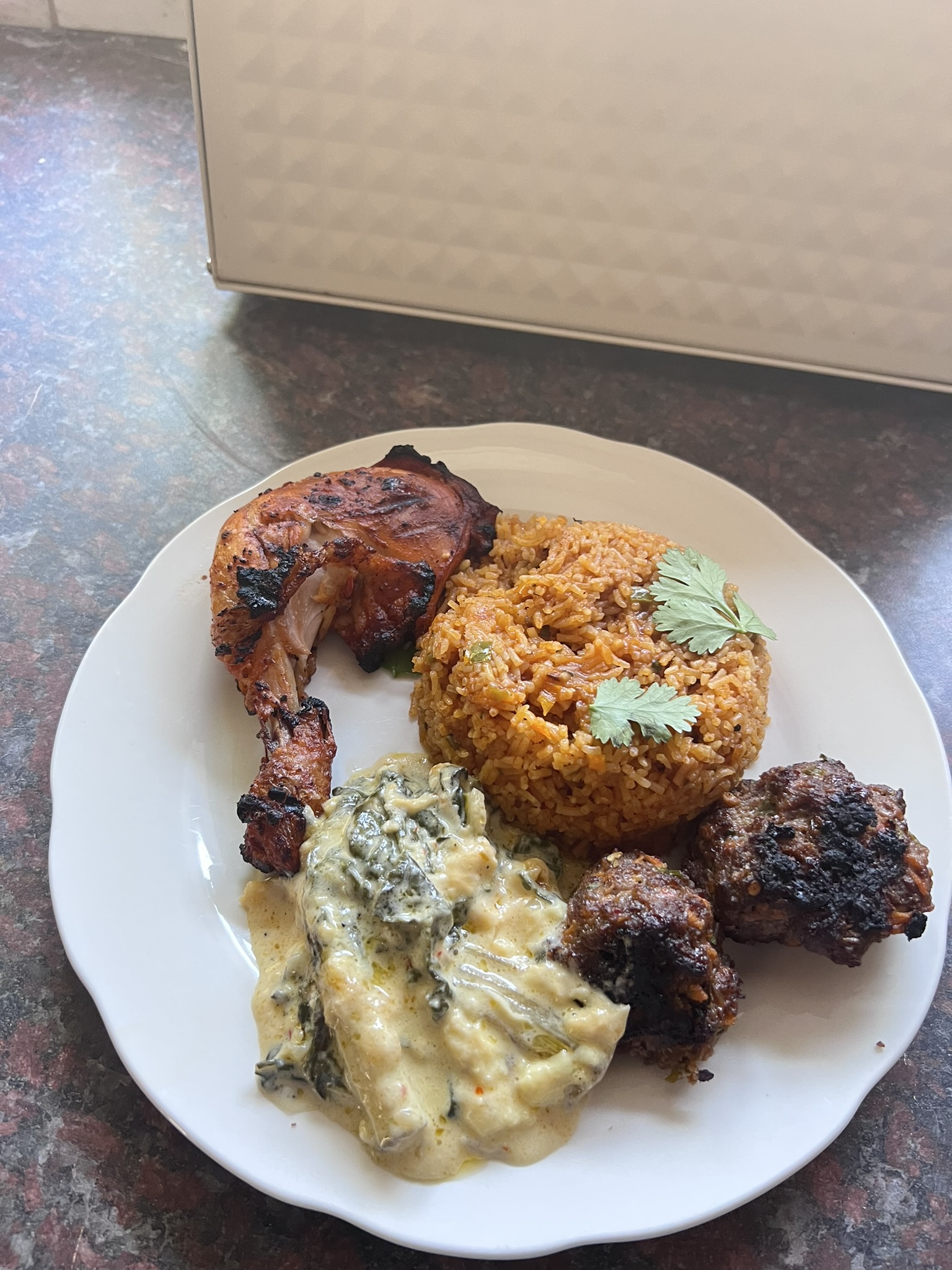
Braai leftovers from yesterday are long gone, so today’s the proper sit-down Sunday lunch — four things on the go at once, all timed to land on the table together. Roast chicken is the anchor, done simply with herb butter under the skin so the skin actually crisps. Frikadelle is the second protein, more because I had the mince in the freezer than any grand plan, but baked meatballs and roast chicken share an oven happily enough. The rice needed to be something with enough heat and acidity to stand up to two rich proteins instead of just soaking up gravy, so it went Mexican instead of the usual plain jeera rice. And the spinach and cheese bake is there to round the whole plate out — it’s rich on its own, but next to chicken and frikadelle it reads as the vegetable course, which is doing it a favour. Writing all four down together since they were cooked together and the timing is half the trick.
Roast Chicken#
Ingredients#
- 1.6–1.8kg whole chicken
- 80g butter, softened
- 4 garlic cloves, finely grated or minced
- 1 tbsp fresh thyme leaves (or 1 tsp dried)
- 1 tbsp fresh rosemary, finely chopped (or 1 tsp dried)
- Zest of 1 lemon, the lemon halved and kept
- Salt and black pepper
- 1 onion, quartered
- 2 tbsp olive oil
- ½ cup chicken stock or water, for the pan
Method#
Dry the bird. Pat the chicken completely dry, inside and out, with paper towel. This is the single biggest thing standing between you and crispy skin — any surface moisture just steams the skin instead of letting it crisp. If you have the time, leave it uncovered in the fridge for a few hours or overnight to dry out further.
Make the herb butter. Mash the softened butter with the garlic, thyme, rosemary, lemon zest, and a good pinch of salt and pepper until it’s an even paste.
Get under the skin. Working from the cavity end, gently loosen the skin over the breast and thighs with your fingers, being careful not to tear it. Push the herb butter under the skin and massage it around from the outside so it’s spread evenly over the breast meat, not just clumped in one spot.
Season and stuff. Rub any leftover butter (or a plain drizzle of olive oil if there’s none left) over the outside of the skin, and season generously all over with salt and pepper. Stuff the cavity with the lemon halves and the onion quarters — they’re not essential to eat, they just add moisture and aroma from the inside as it roasts.
Truss loosely. Tie the legs together with kitchen string and tuck the wing tips under the body. This isn’t about presentation — it stops the wings and legs from drying out and burning before the thighs are cooked through.
Roast. Preheat the oven to 220°C. Place the chicken breast-side up on a rack in a roasting pan, pour the stock or water into the bottom of the pan (this stops the drippings from burning and gives you the base for a quick pan sauce), and roast for 20 minutes. Drop the oven to 190°C and continue roasting for another 50–60 minutes, until the skin is deep golden and the juices run clear.
Check it’s done. Push a meat thermometer into the thickest part of the thigh, avoiding the bone — you’re after 74°C. If you don’t have a thermometer, pierce the thigh with a skewer; the juices should run clear, not pink.
Rest properly. Take the chicken out of the oven, tent loosely with foil, and let it rest for 15–20 minutes before carving. Don’t skip this — carve it straight out of the oven and all the juice you worked to keep in the meat ends up on the board instead of the plate.
Notes#
- Getting the butter under the skin rather than just on top of it is what actually flavours the meat instead of just the skin — worth the two extra minutes and the risk of a small tear.
- If the skin is browning too fast before the thigh is up to temperature, loosely cover just the breast with foil for the last 15–20 minutes rather than dropping the oven temperature further.
- The onion and lemon in the cavity go in the bin after — they’ve given up all their moisture to the bird by the time it’s done, they’re not meant to be eaten as a side.
- Resting isn’t optional. A rested chicken carves clean; a rushed one bleeds juice all over the board and ends up drier on the plate for it.
Frikadelle#
Ingredients#
- 800g beef mince (a mix of beef and pork mince works well if you can get it)
- 1 onion, finely grated (not chopped — grated releases moisture into the mix)
- 1 egg
- ¾ cup dry breadcrumbs
- ¼ cup milk
- 2 tbsp fresh parsley, finely chopped
- 1 tsp ground nutmeg
- ½ tsp ground allspice (optional, but classic)
- 1 tsp paprika
- 1 tsp crushed chilies
- 1 tsp peri peri
- 1 tsp coriander
- 1 tsp chipotle
- 1 tsp cayenne pepper
- 1 tsp custom-made curry powder
- Salt and black pepper
- Dried bay leaves, one per meatball
- 2 tbsp oil or butter, for the pan
Method#
Soak the breadcrumbs. In a small bowl, soak the breadcrumbs in the milk for 5 minutes until soft and the milk is absorbed. This is what keeps frikadelle moist inside instead of turning dense and dry once baked.
Mix the base. In a large bowl, combine the mince, grated onion, egg, soaked breadcrumbs, parsley, nutmeg, allspice, salt, and a generous amount of black pepper. Mix with your hands until just combined — overworking the mince makes the meatballs tough.
Shape. Roll the mixture into balls slightly larger than a golf ball, and flatten them very slightly into a squat, domed shape rather than a perfect sphere — this is the traditional frikadelle shape and it also helps them cook through evenly.
Bay leaf on top. Press one small piece of bay leaf (or a whole small leaf) into the top of each frikadelle. It’s a South African tradition more than a huge flavour contributor on its own, but it does perfume the meatballs as they bake and it’s not a frikadelle without it.
Sear first. Heat the oil or butter in an ovenproof pan over medium-high heat. Sear the frikadelle for 2–3 minutes per side, in batches if needed, until browned all over. Don’t try to cook them through in the pan — you’re only building colour and flavour here.
Finish in the oven. Transfer the pan (or move the frikadelle to a baking dish) to a 180°C oven and bake for 20–25 minutes, until cooked through and no longer pink in the middle.
Notes#
- Grating the onion instead of chopping it does two things — it disappears into the mixture instead of leaving raw onion chunks, and it adds moisture the same way the milk-soaked breadcrumbs do.
- Nutmeg is the spice that makes this taste like frikadelle rather than a generic meatball — don’t leave it out, and don’t double it either, it turns soapy fast if you overdo it.
- Searing before the oven isn’t just for looks — the fond left in the pan is worth deglazing with a splash of stock or water for a quick gravy to spoon over the finished frikadelle.
- These freeze well raw, shaped and with the bay leaf already in — lay them out on a tray to freeze individually before bagging them, so they don’t stick together.
Mexican Spicy Rice#
Ingredients#
- 2 cups long-grain white rice, rinsed until the water runs clear
- 3 tbsp oil
- 1 onion, finely diced
- 3 garlic cloves, minced
- 1–2 jalapeños, finely diced (seeds in if you want more heat)
- 2 tsp ground cumin
- 1½ tsp chili powder
- 1 tsp smoked paprika
- ½ tsp chipotle powder or 1 chipotle in adobo, finely chopped (optional, for a deeper smoky heat)
- 1 cup tomato puree or 2 large tomatoes, blended smooth
- 3 cups chicken stock, hot
- Salt, to taste
- Fresh coriander, chopped, for serving
- Lime wedges, for serving
Method#
Toast the rice. Heat the oil in a heavy pot with a tight-fitting lid over medium heat. Add the rinsed, drained rice and stir constantly for 3–4 minutes until the grains turn opaque and just start to pick up a little colour at the edges. This step is what keeps the rice from turning to mush later — don’t skip it.
Build the aromatics. Push the rice to one side, add the onion, garlic, and jalapeño to the cleared space, and cook for 2–3 minutes until the onion softens. Stir everything back together.
Add the spices. Stir in the cumin, chili powder, smoked paprika, and chipotle if using, and cook for 30 seconds to a minute until fragrant — you’ll smell the difference once the spices bloom in the oil.
Add the liquid. Pour in the tomato puree and cook for 1–2 minutes, stirring, until it darkens slightly. Add the hot chicken stock and salt, and stir once to combine — don’t stir again after this point, it’s what makes the rice release too much starch and go gluey.
Simmer, covered. Bring to a boil, then immediately drop to the lowest heat setting, cover with a tight lid, and simmer for 18–20 minutes without lifting the lid.
Rest. Turn off the heat and let the rice sit, still covered, for 10 minutes. Fluff with a fork only once the resting time is up.
Finish. Scatter over fresh coriander and serve with lime wedges on the side — a squeeze of lime right before eating wakes the whole thing up.
Notes#
- Using hot stock rather than cold is what keeps the cooking time consistent — cold liquid drops the pot’s temperature and throws off the timing, leaving you with rice that’s cooked outside but still bitey in the centre.
- Rinsing the rice until the water runs clear removes surface starch and is the difference between distinct, separate grains and a stickier, risotto-adjacent texture — you want the former here.
- If you like it hotter, adjust with the jalapeño and chipotle rather than the chili powder — chili powder mostly adds colour and a background warmth, the fresh and smoked chilies are where the actual heat comes from.
- Leftovers reheat well with a splash of water or stock in a covered pan on low heat — the microwave dries it out.
Creamy Spinach and Cheese#
Ingredients#
- 800g fresh spinach, washed (or 2 x 300g frozen chopped spinach, thawed and squeezed dry)
- 2 tbsp butter
- 1 small onion, finely diced
- 2 garlic cloves, minced
- 2 tbsp flour
- 1 cup milk
- ½ cup cream
- 1½ cups grated cheddar, divided
- ¼ cup grated parmesan
- ¼ tsp ground nutmeg
- Salt and black pepper
- Pinch of chili flakes (optional)
Method#
Wilt the spinach. If using fresh spinach, wilt it in batches in a dry pan over medium heat until it collapses down, then tip into a colander and press out as much liquid as possible once cool enough to handle — squeeze it with your hands, it holds more water than you’d think. Roughly chop. If using frozen, just make sure it’s squeezed thoroughly dry before it goes anywhere near the sauce.
Build the base. In a saucepan, melt the butter over medium heat. Add the onion and cook until soft, about 4–5 minutes, then add the garlic and cook for another minute.
Make the roux. Sprinkle in the flour and stir constantly for a minute to cook out the raw flour taste, without letting it brown.
Add the dairy. Gradually whisk in the milk, a little at a time, making sure each addition is smooth before adding more. Once all the milk is in, stir in the cream and bring to a gentle simmer, stirring, until it thickens enough to coat the back of a spoon.
Cheese and spinach. Take the pan off the heat and stir in 1 cup of the cheddar and all the parmesan until melted and smooth. Fold in the squeezed, chopped spinach, the nutmeg, chili flakes if using, and season with salt and pepper.
Bake it off. Transfer to a small baking dish, scatter the remaining ½ cup of cheddar over the top, and bake at 200°C for 15–20 minutes, until bubbling and golden on top. If you’re short on oven space with the chicken and frikadelle already in there, it’s just as good finished under the grill for 5 minutes instead.
Notes#
- Squeezing the spinach dry properly is the one step that decides whether this is creamy or watery — undersell it and you’ll end up with a thin, weepy sauce no matter how well the roux went.
- Nutmeg and spinach are a classic pairing for a reason — a small amount rounds out the richness of the cream and cheese instead of just tasting like more dairy.
- This can be made ahead up to the end of step 5 and refrigerated, then baked just before serving — add a few extra minutes in the oven if it’s going in cold.
- If the sauce looks too thick after adding the cheese, loosen it with a splash more milk before it goes in the oven — it thickens further as it bakes.